Roadbook · Moroccan Sahara
4x4 travel in Morocco: the great South road trip, track after track
A 4x4 trip in Morocco rarely begins in the sand. It begins on a mountain pass road, in the fresh air of the High Atlas, with a steering wheel firmly in hand and a few days ahead of you. Further south, tarmac becomes scarce, earth-coloured kasbahs take on the colour of the evening, and the horizon flattens out towards the dunes of Merzouga or Chegaga.
This page is a road trip logbook, not a brochure. You will find six proposed 4x4 circuits in Morocco, distance and duration benchmarks, the seasons to aim for, what to pack, and how a quote is prepared. Everything remains indicative until a guide has confirmed the tracks, the weather, and your ability level. Each stage is decided with you.
Are you looking for a guided 4x4 raid in the desert? Discover our raids →
- Years of experience
- +5 ans
- Number of raids
- +10 raids
- Local guides
- +15 guides locaux
- Note
- +90 %
Why choose a 4x4 trip in the Moroccan South?
From Marrakech, the road climbs to the Tizi n'Tichka, at about 2,200 m altitude, then descends towards Ouarzazate and its kasbahs. Next come the Dades and Todra valleys, the Draa palm groves, and the ergs: Chebbi near Merzouga, Chegaga near M'Hamid.
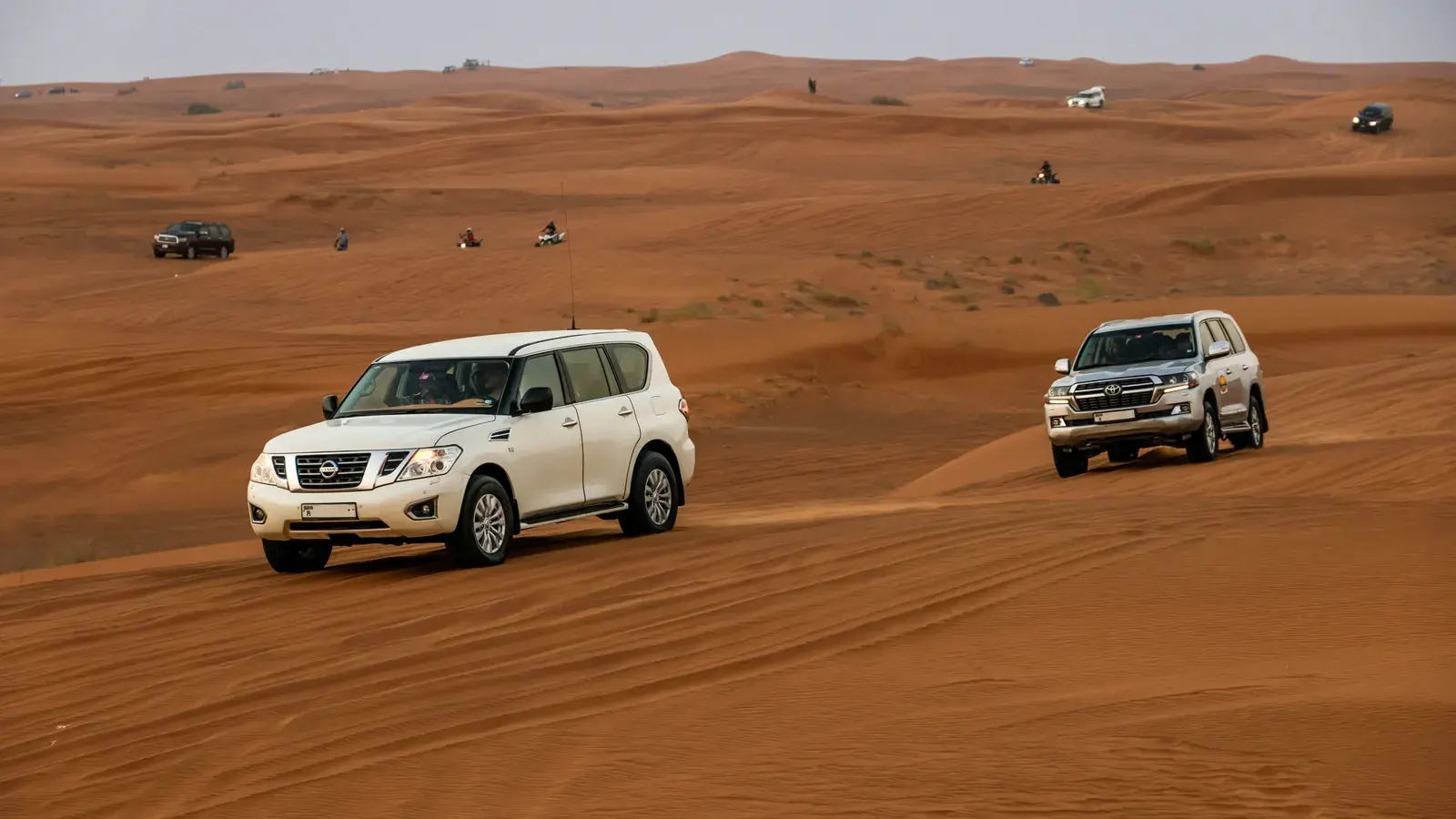
Here, the 4x4 serves as access, not for performance. A stony track, a ford after rain, a soft-sand approach to a bivouac: a high vehicle, suitable tyres, and a guide who knows the terrain never eliminate the risks.
A Marrakech–Merzouga–Marrakech loop in three days can represent about 1,150 to 1,300 km. Beyond that, the tracks slow you down: allow three to six hours per stage. Refuel before the long links between Ouarzazate and M'Hamid. Stop at the well, the market, or in the palm grove. In winter, the sun sets early.
To sleep under the stars, read our page desert camp in Morocco. For the dunes, see the Merzouga circuit or theErg Chegaga.
Our most popular 4x4 circuits in Morocco
Six 4x4 circuits to be confirmed. Distances and durations remain indicative according to tracks and weather.
Great Moroccan South by 4x4 – 14 days
- 14 jours
- Departure: Marrakech
- Progressif
You will cross the High Atlas and the kasbahs before discovering two deserts: the Erg Chebbi and the Erg Chegaga. This fourteen-day proposal includes short stages, walks in palm groves and nights alternating between solid accommodation and bivouac.
From [TO BE COMPLETED] — on quotation
See the circuit : Great Moroccan South by 4x4 – 14 days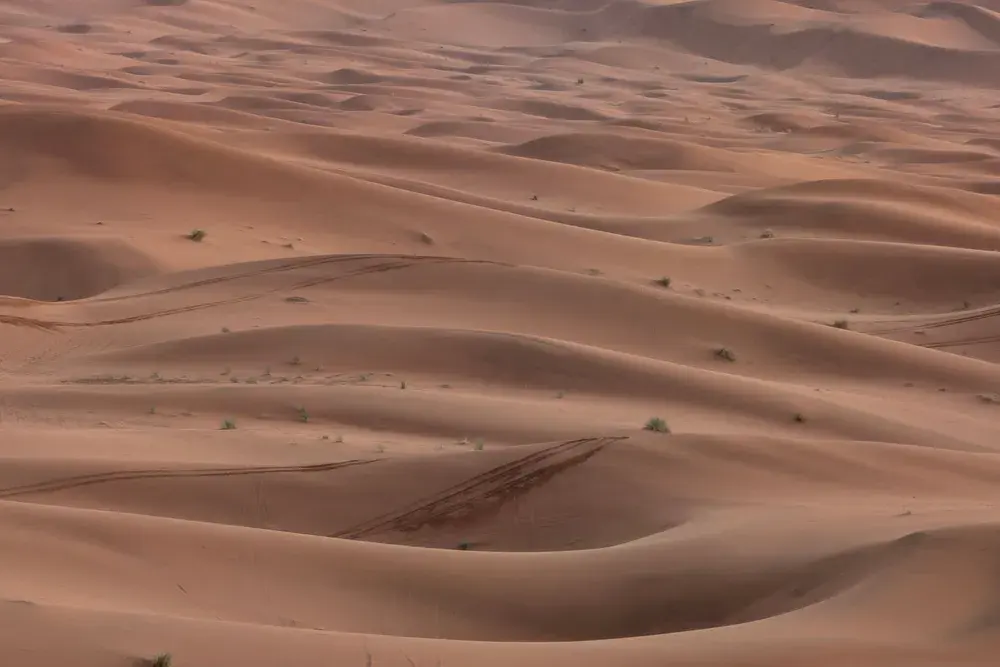
Marrakech → Merzouga express – 3 days
- 3 jours
- Departure: Marrakech
- Accessible, long days
You have three days to reach the dunes of Merzouga. This format focuses on the scenic route and a night near the Erg Chebbi rather than a serious crossing raid. Transfers remain long: with young children, extend the stay.
From [TO BE COMPLETED] — on quotation
See the circuit : Marrakech → Merzouga express – 3 days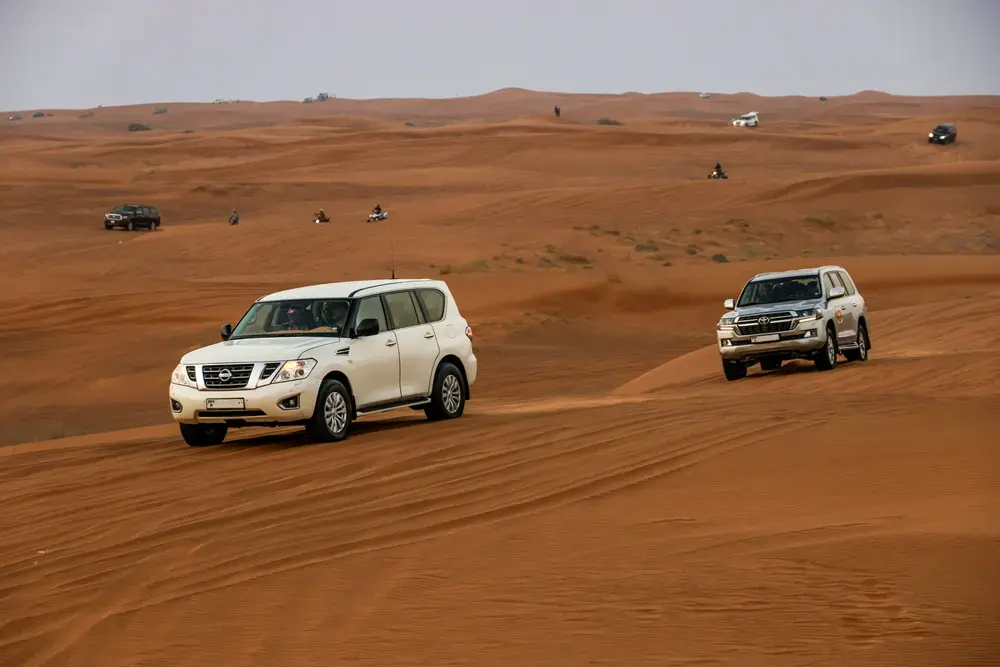
The grand loop of the dunes – 8 days
- 8 jours
- Departure: Ouarzazate
- Intermediate
You are comparing the dunes of Merzouga to the spaces of Chegaga. The links use authorised southern routes, never an improvised track. Eight days allow for alternating sand, hamada and breaks, with a pace adjusted to the convoy and the weather.
From [TO BE COMPLETED] — on quotation
See the circuit : The grand loop of the dunes – 8 days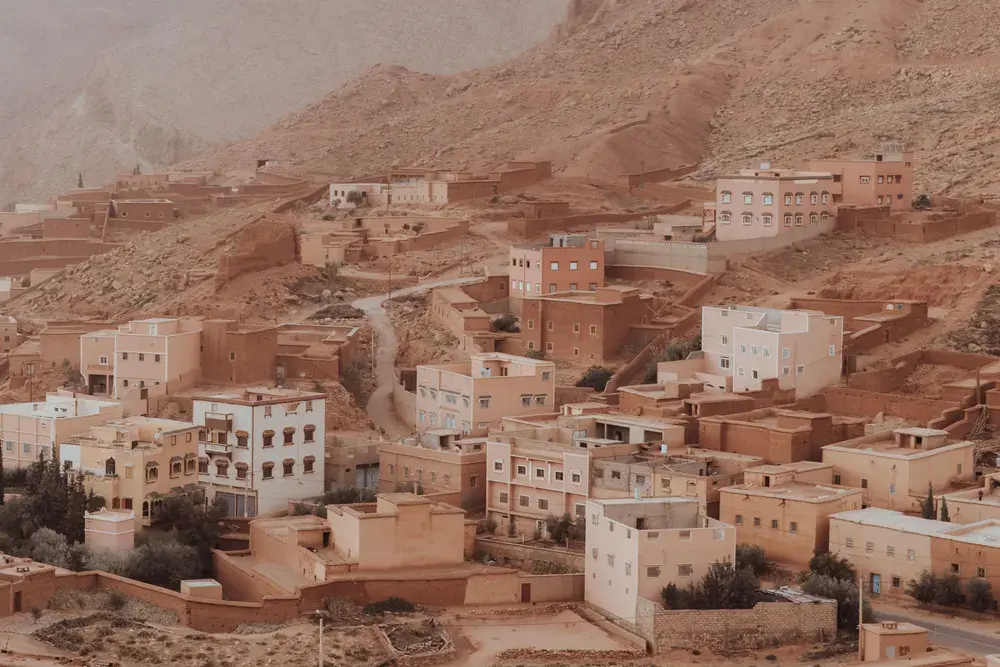
Road of a thousand kasbahs – 7 days
- 7 jours
- Departure: Marrakech
- Accessible
You drive between mud-brick villages, cultivated valleys and the High Atlas. The journey favours meetings, walking and small roads. Detours on tracks complete the stages if their access and condition are confirmed: no mandatory crossings.
From [TO BE COMPLETED] — on quotation
See the circuit : Road of a thousand kasbahs – 7 days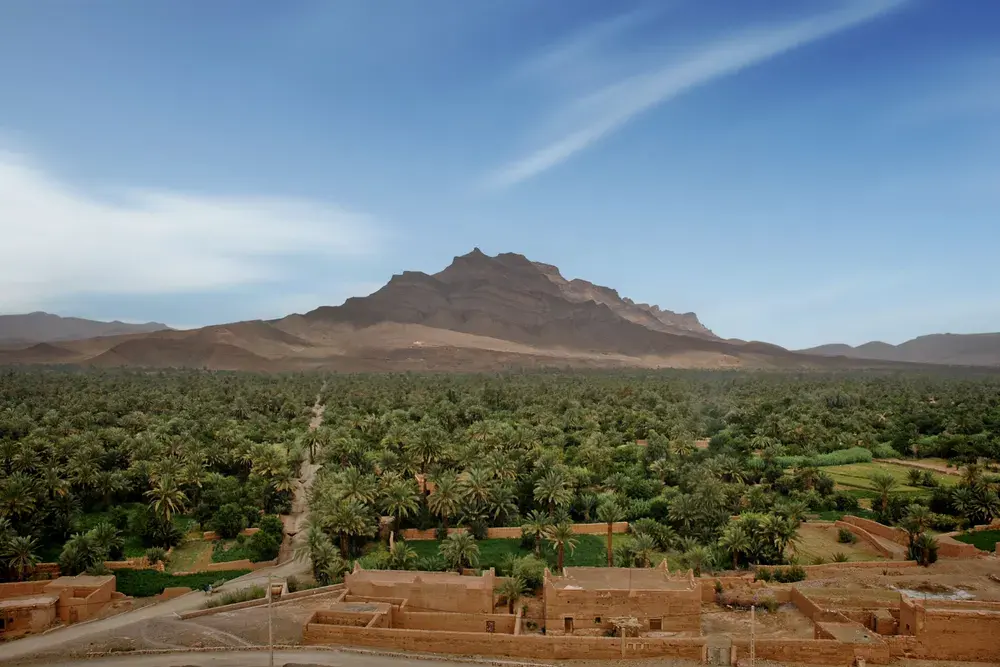
Oasis and palm groves of the South – 6 days
- 6 jours
- Departure: Ouarzazate
- Accessible
You follow the gardens and villages of the Drâa before Tagounite. The days leave time for breaks and walks, without long crossing sessions. This route approaches the deep South at a calm pace; an extension towards M’Hamid depends on the season.
From [TO BE COMPLETED] — on quotation
See the circuit : Oasis and palm groves of the South – 6 days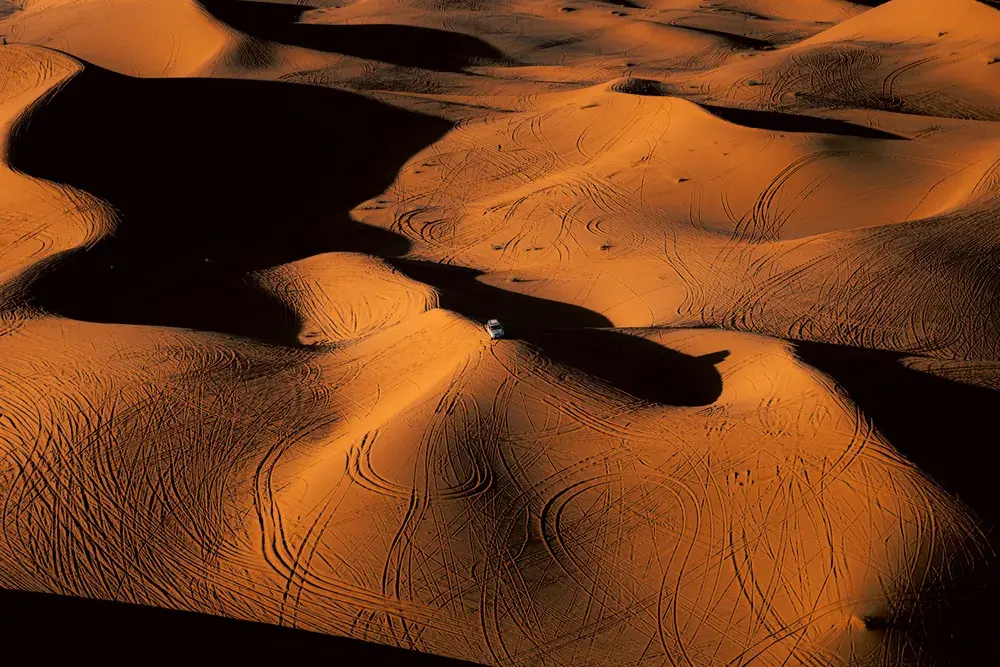
Expedition Erg Chegaga & Lake Iriki – 5 days
- 5 jours
- Departure: Tagounite
- Intermediate
You set off from Tagounite towards M’Hamid and Chegaga. The convoy advances at the pace of the terrain; you learn to recover from being stuck and choose a trajectory. The crossing of Lake Iriki towards Foum Zguid remains conditional: wet ground requires another path.
From [TO BE COMPLETED] — on quotation
See the circuit : Expedition Erg Chegaga & Lake Iriki – 5 days
Travelling as a family
A 4x4 trip with children requires short stages and carefully chosen nights. Read our page on 4x4 raids in Morocco with the family.
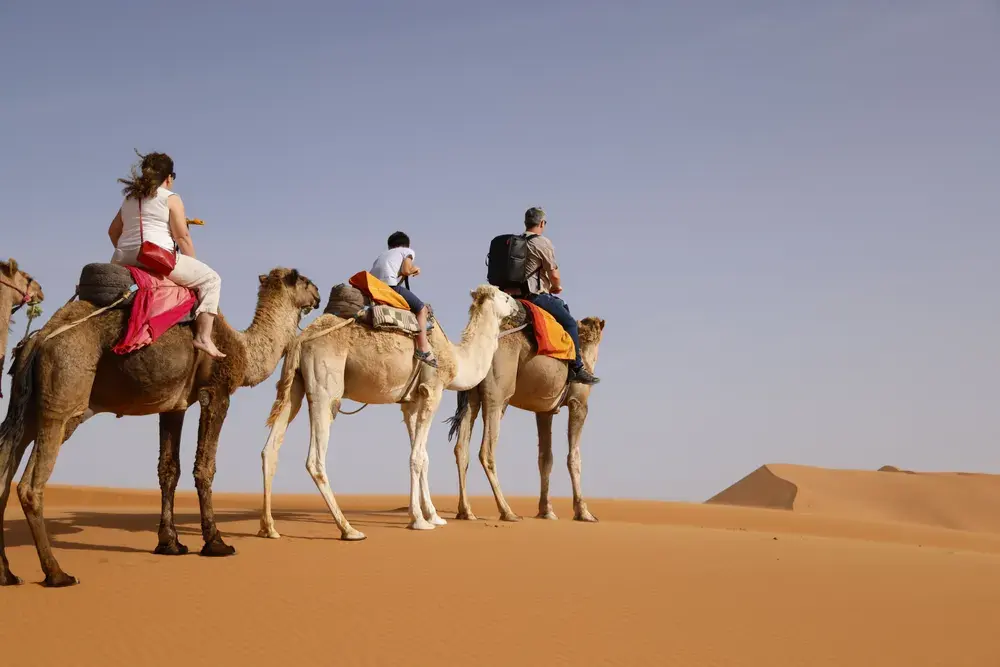
Typical itinerary for a day of 4x4 raiding
Matin
Fresh start. check, water.
Piste
Slow driving. the guide reads the terrain.
Midi
Ombre. long break.
Afternoon
Dunes. deflated tyres.
Soir
Ridge. mint tea.
Nuit
Bivouac or kasbah. briefing.
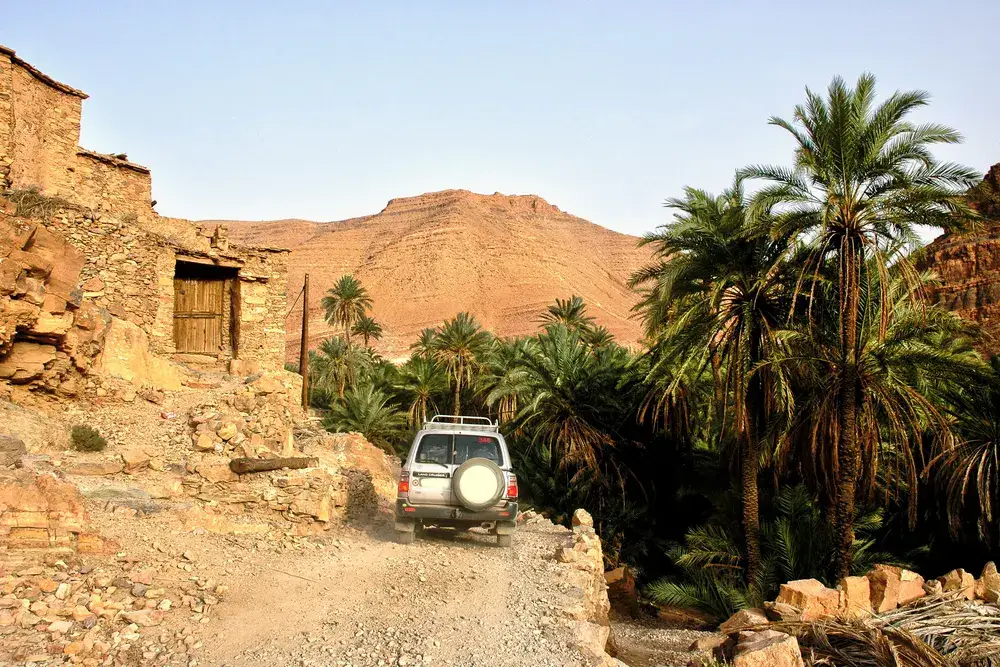
Can you personalise the stages of your circuit in the desert?
Yes, the stages can be personalised, within the limits of open tracks, safety, and the season.
The six circuits serve as a starting point. You can lengthen a stage, add a rest day in Merzouga, replace Chegaga with a softer approach, or reverse the loop. Indicate your dates, your driving experience, and what you absolutely want to see.
The guide then confirms what is feasible, then the quote details nights, meals, and assistance. Nothing is fixed before this confirmation, and a lighter variant remains possible if the pace worries you, for example with children.
Guide's advice: Choose three priorities, not ten: an itinerary that has room to breathe is easily reorganised.
Good to know: Border zones are excluded and some passes close after rain.
How are the stages of a jeep trip in the Sahara organised?
A stage follows a simple rhythm: early departure, road or track until midday, a long break, then a final section before nightfall.
Depending on the circuit, driving varies from two to nine hours. In the sand, distance matters little: twenty kilometres of dunes can last longer than a hundred of road. The guide sets the pace based on the group, wind, and temperature.
Each evening, a briefing presents the following day: estimated mileage, water, fuel, fallback solution. A margin of one day in the week avoids racing against the clock.
Guide's advice: Refuel as soon as possible: a closed petrol station quickly complicates a stage.
Good to know: The durations in the datasheets are orders of magnitude, never a guaranteed schedule. Allow for a margin when waking up.
Where do you sleep during a 4x4 safari in Morocco? (bivouac, kasbah, riad)
You sleep according to the stage: in a bivouac in the dunes, in a kasbah-style guesthouse in the valleys, or in a riad in cities like Marrakech.
A desert camp offers peace and open skies, with simple comforts: tents, blankets, an evening meal and basic facilities. A kasbah offers earthen walls, a proper shower and terraces. A riad is a convenient choice for stopover days.
Alternating protects the budget and reduces fatigue, especially as a family. The type of night and meals are specified in the quote; nothing is presumed to be included. Specify your needs: vegetarian, allergies, hot water.
Guide's advice: Pack a headlamp and warm clothing: nights in the erg cool down quickly.
Good to know: The comfort of a bivouac depends on the site and the season. Ask what is provided.
What 4x4 vehicles are used for a raid in the desert?
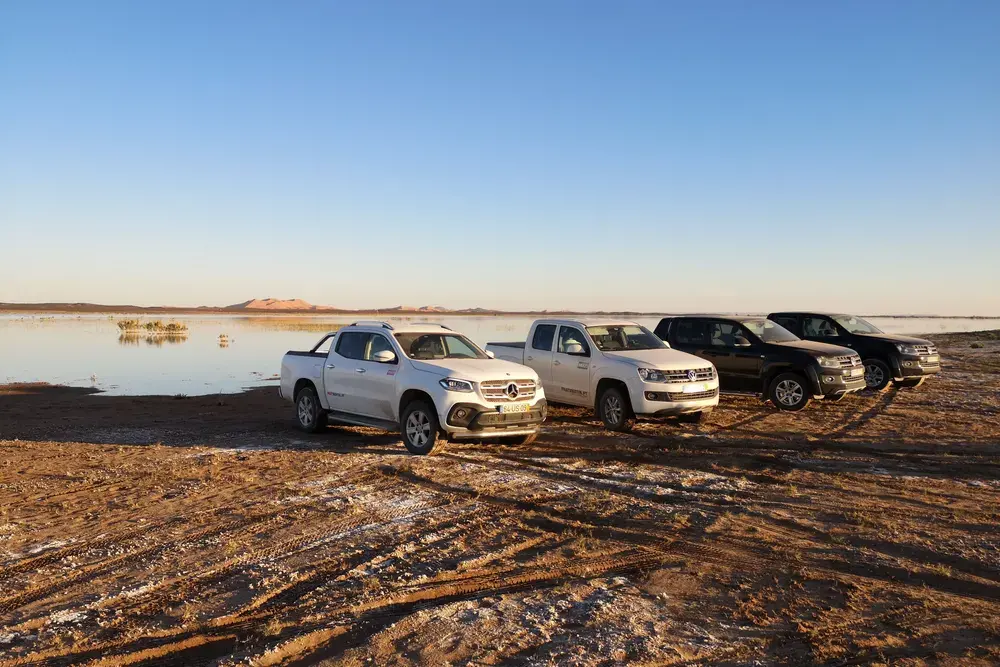
A raid in the desert requires a 4x4 with sufficient ground clearance, good tyres, and impeccable mechanics.
Two options exist: travel with a driver in a provided vehicle, or drive your own 4x4. The quote form asks for your preference; vehicle type and conditions are to be confirmed in the quote, as well as insurance.
For a personal vehicle, plan a check before departure: tyres, fluid levels, filters, brakes, spare tyre, straps, shovels, and sand ladders. A vehicle that is too low, too heavy, or poorly shod fatigues the whole group, especially in dunes.
Guide's advice: Deflate the tyres before the sand, re-inflate as soon as you hit hard tracks: this prevents many cases of getting stuck.
Good to know: Aggressive driving in the dunes quickly breaks parts.
What budget should be planned for a week in a 4x4 in the Moroccan South?
The budget for a week in a 4x4 in the Moroccan South depends on the vehicle, number of travellers, nights, and assistance. No prices are displayed here: everything is specified upon request.
The main items are the vehicle or driver, fuel, nights, meals, and assistance. A bivouac trip does not cost the same as a riad trip. Sharing a vehicle spreads out fixed costs.
Also ask how unforeseen events are handled, such as repairs or an extra night, before accepting an offer. The seven-day kasbah circuit serves as a base for comparison.
| Package | Duration | Price per person | Included |
|---|---|---|---|
| Express Marrakech → Merzouga | 3 days | On request | To be specified in the proposal |
| Road of the Kasbahs | 7 days | On request | To be specified in the proposal |
| Great South in a 4x4 | 14 days | On request | To be specified in the proposal |
Guide's advice: Compare quotes based on the same criteria: nights, meals, fuel, assistance.
Good to know: The amounts in the table remain to be filled in; always ask what is excluded.
What is the best season for a 4x4 raid in Morocco?
From March to May and from October to November, conditions are generally the mildest for a 4x4 raid in Morocco.
The monthly averages in the table, close to Merzouga, range from 9 °C in January to 34 °C in July. These smooth out extremes: winter nights are much colder, summer afternoons are much hotter.
Before leaving, consult a local forecast and ask the guide about the state of the tracks. Sandstorms can arise in any season, especially in spring; they reduce visibility. Allow for a margin of a day, especially in April, to absorb rescheduling.
| 1: Month | Average temperature | Vent | Affluence |
|---|---|---|---|
| January | 9 °C | Variable | To be confirmed |
| February | 11 °C | Variable | To be confirmed |
| March | 16 °C | Sand possible | To be confirmed |
| April | 20 °C | Sand possible | To be confirmed |
| May | 25 °C | Sand possible | To be confirmed |
| June | 30 °C | Variable | To be confirmed |
| July | 34 °C | Variable | To be confirmed |
| August | 33 °C | Variable | To be confirmed |
| September | 28 °C | Variable | To be confirmed |
| October | 22 °C | Variable | To be confirmed |
| November | 15 °C | Variable | To be confirmed |
| December | 10 °C | Variable | To be confirmed |
Local averages NASA POWER (T2M, 2001–2020), not extremes or forecasts. Source NASA POWER.
Guide's advice: Book early for April and October, which are very popular periods.
Good to know: After heavy rain, some fords and the Lake Iriki sector can be impassable.
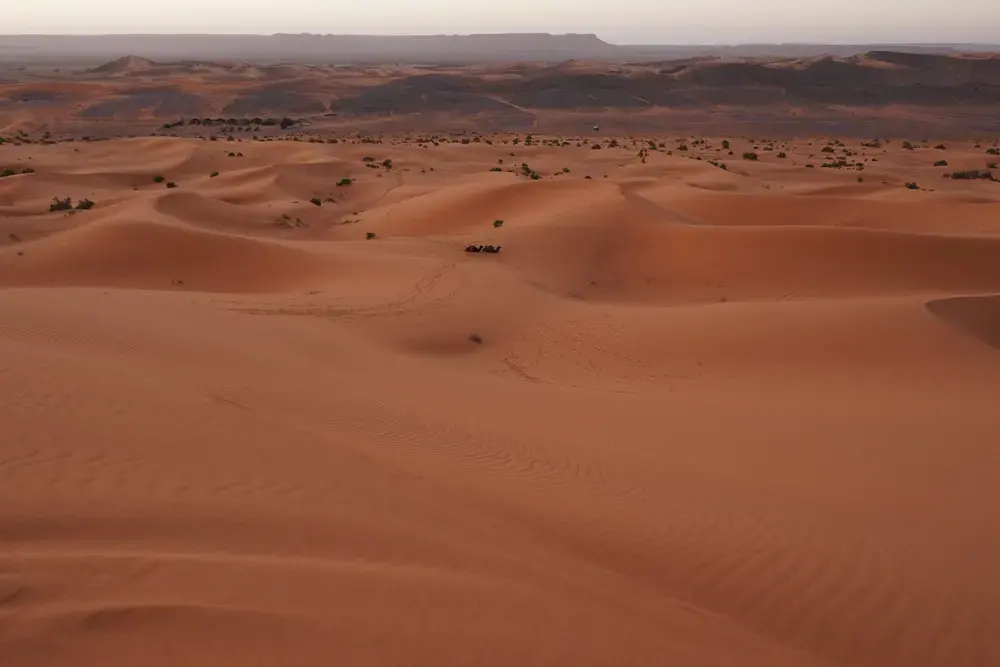
What to pack in your bag for a raid in the desert?
For a raid in the desert, pack light but well: light layers, serious sun protection, and something to keep you warm in the evening.
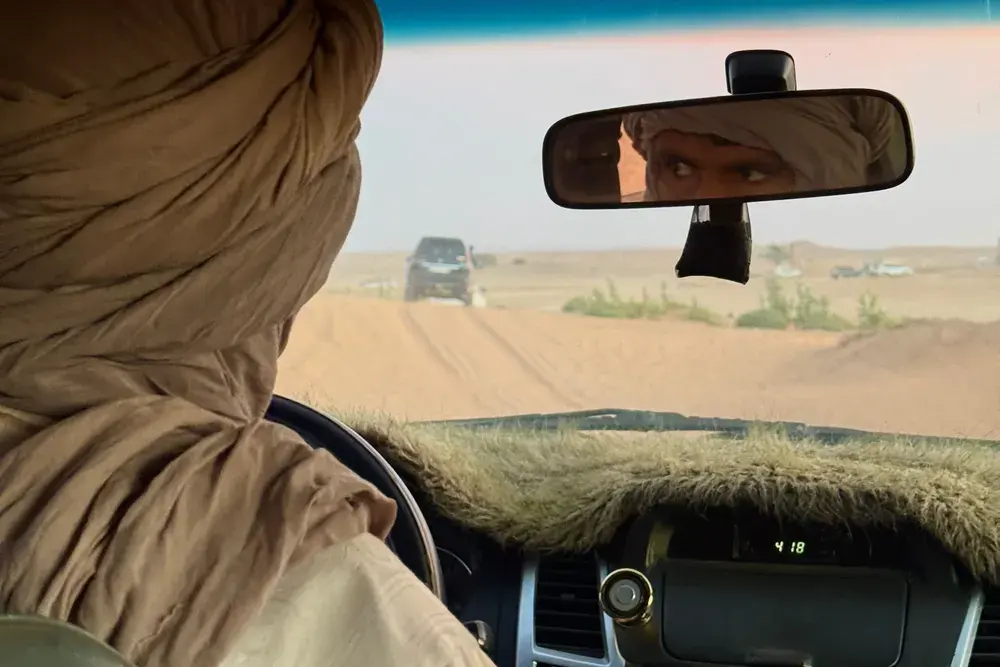
Opt for light-coloured and loose-fitting clothing, a tagelmust, wrap-around sunglasses, a water bottle, and closed-toe shoes. Add a sleeping bag suitable for the season if the bivouac does not provide one, and your personal medication.
Choose a soft bag, which is easier to fit in a boot than a rigid suitcase. The list below summarises the essentials. Add a first aid kit: plasters, antiseptic, lip balm, saline solution for sand. A warm layer is essential as soon as the sun goes down.
- Tagelmust and hat
- Sunglasses and sun cream
- Warm layer for the night
- Closed-toe shoes
- Water bottle or hydration pack
- Headlamp
- Anti-sand pouches
- Documents and insurance
Guide's advice: Protect your phone and camera from sand with zip-lock bags.
Good to know: Check documents, insurance, and vaccinations before leaving.
They rode with us
- [TO BE COMPLETED] Verified review no.1.
- [TO BE COMPLETED] Verified review no.2.
- [TO BE COMPLETED] Verified review no.3.
Consult also the page of traveller reviews.
Prepare your 4x4 raid with Raids du Sud
Entrust us with the organisation of your trip
Quote request: no payment, no confirmed booking.
A question before writing? Contact page.