By the Raids du Sud team — guides and mechanics based in Tagounite
Sleeping in the Sahara can be one of the highlights of a guided adventure, if the camp meets your expectations. This guide brings together preparation for a night and advice from our previous article on staying in a desert camp, now grouped here.
Discover our 4x4 guided adventure in Morocco and compare the packages suited to your project.
For many travellers, the highlight of a trip to Morocco comes down to one night: the one spent in the middle of the dunes. Silence, campfire, sky filled with stars… But not all bivouacs are the same. Here is how the night unfolds and how to choose the right camp.
What is a bivouac stay in Morocco like?
A bivouac is a camp set up in the desert. The tents are inspired by those of nomads, made of wool or heavy canvas. You will, however, sleep on real beds with blankets. Comfort levels vary significantly from one camp to another.
Typical evening schedule
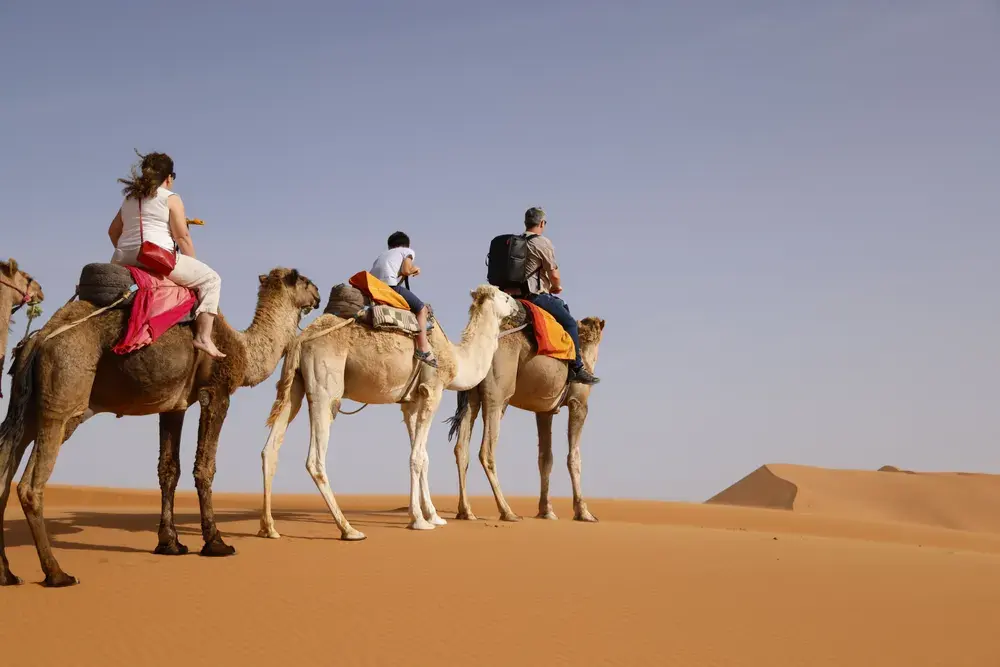
- Arrival by 4x4 or camel in the late afternoon.
- Afterwards, climbing a dune for the sunset.
- Mint tea, then dinner: tajine, soup, fruit.
- Berber music around the campfire.
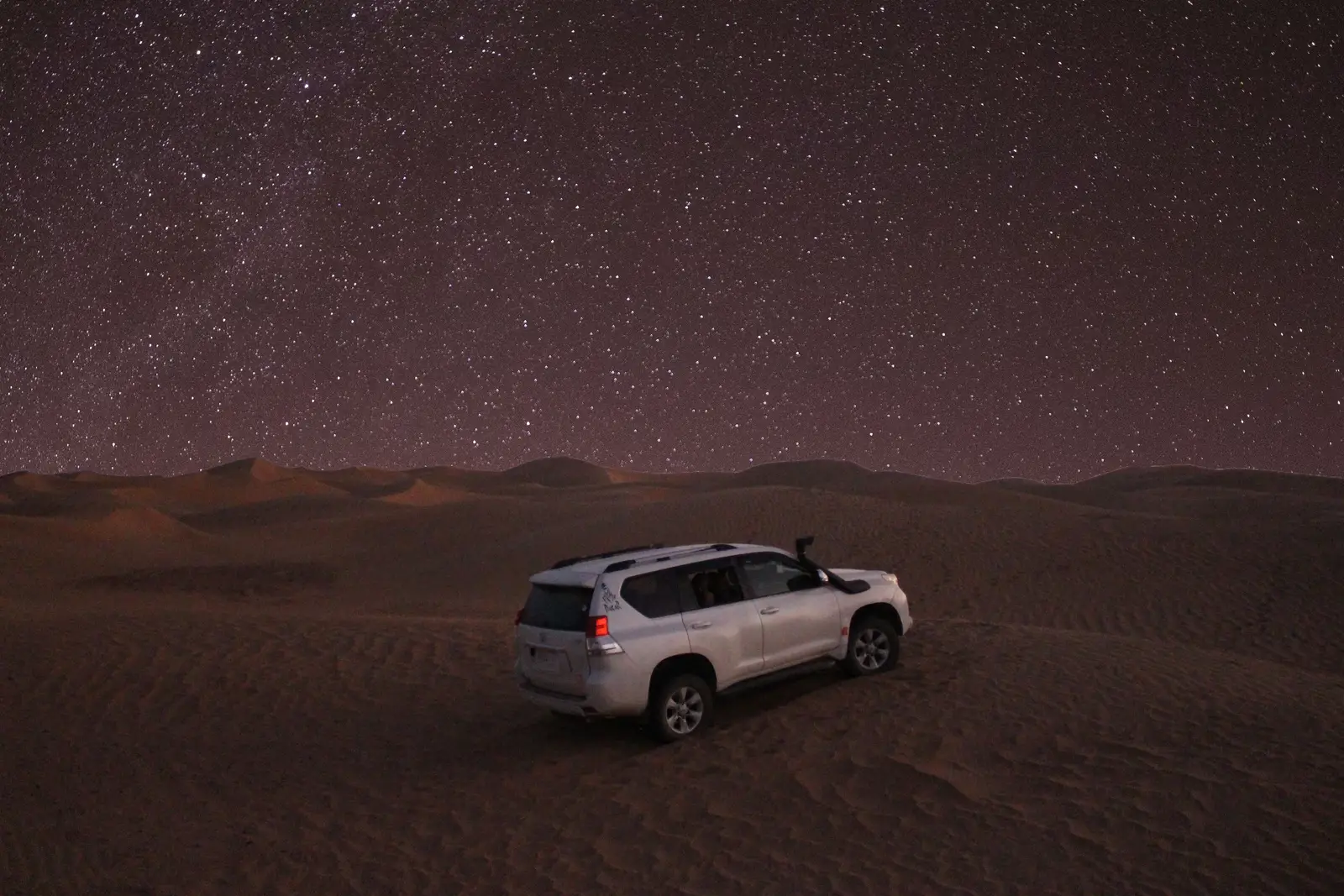
- Stargazing, then a night in the tent.
- Finally, waking up before dawn for the sunrise.
Standard, comfort or luxury bivouac: what are the differences?
| Camp type | Tent | Sanitary facilities | For whom? |
|---|---|---|---|
| Standard | Shared or simple tent | Communal | Small budgets, experienced travellers |
| Comfort | Private tent with beds | Communal or private depending on the camp | Couples, families |
| Luxury | Large decorated private tent | Private bathroom | Honeymoons, high-end stays |
Which desert should you choose for your stay in Morocco?
- Erg Chebbi (Merzouga): the highest and most accessible dunes. The most popular choice.
- Erg Chigaga (M'Hamid): more isolated, accessible only by track. Ideal for escaping the crowds.
- Zagora: smaller dunes, but an option possible in two days from Marrakech.
- Agafay: a stone desert near Marrakech, without sand dunes.
For the large dunes, our guide to the Merzouga organised trip details access to the Erg Chebbi.
How many nights should you spend in the desert?
One night is enough to discover it. However, two nights change the experience: you enjoy a full day on-site, without a race against the clock. You then have time for sandboarding, walking in the dunes or a visit to the village of Khamlia.
What to pack in your bag?
- A fleece or a down jacket, as the temperature drops significantly at night.
- A scarf (cheche) for the sun and wind.
- A headlamp.
- A small bag for the night, as large luggage often stays in the vehicle.
5 questions to ask before booking
- Are the sanitary facilities private or shared?
- Is the camp accessible by 4x4 right up to the tents?
- Are the tents heated or well-insulated in winter?
- Is the camp isolated or surrounded by other bivouacs?
- How does the camp manage water and waste?
Finally, to prepare for the rest of your trip, also consult the Moroccan National Tourism Office website.
Experience your stay in the Moroccan desert with Raids du Sud
Raids du Sud includes nights in a bivouac in each of its 4x4 raids in Morocco. To enjoy other experiences on-site, also read our selection of adventures in Morocco. Then, tell us the level of comfort you desire, and we will suggest the appropriate camp.
Wild bivouac, comfort camp or luxury: checking the facilities
A mobile or simple desert camp prioritises installation in a chosen area for the overnight stop. Sleeping arrangements, shelter and facilities may be limited. Conditions must be clarified before departure, particularly regarding sanitary facilities, water and personal equipment. The term "wild" does not mean you can camp anywhere: access, permissions and local usage must still be respected.
An equipped camp may offer bedding, a meal and sanitary facilities, without all installations being private. A so-called 'comfort' offer should therefore be read in detail. Ask if the tent is shared, how water is provided and what is available to charge a device. A photograph showing décor does not explain the conditions of a cold or windy night.
A luxury desert camp in Morocco is a commercial title, not a standard that is identical in every camp. Check the precise services: tent, bathroom, bedding, meals and access. Do not assume air conditioning, heating or a reliable connection. The right choice is the one that meets the travellers' needs and the programme, not the one with the most flattering name.
Merzouga or Erg Chegaga: two approaches to access
Around Merzouga, the Erg Chebbi allows for different approaches to the dunes and several types of stay. The proximity of road networks does not mean that all camps are accessible by any vehicle. Ask how the transfer is carried out, where luggage remains and at what time you must reach the starting point.
In the Erg Chegaga sector, progress can be more isolated and require specific preparation. Self-sufficiency, supervision and contingency plans must be adapted. Do not choose this sector solely for a promise of absolute solitude: footfall, wind and camp conditions depend on the location and dates.
The choice between these destinations depends on the time available, the route and the desired comfort. A night after a very long transfer does not offer the same experience as a stay with a day of discovery on-site. Consult the Merzouga and Chegaga guides before booking, then ask for a proposal consistent with your starting point.
The flow of a night: keeping time to settle in
Arrival allows you to understand the camp's organisation: sleeping arrangements, sanitary facilities, water, accessible areas and instructions. A break or a short walk may follow if conditions are suitable. The sunset should not push the group to speed up to reach a viewpoint. Times depend on the season and actual progress.
The meal and any social time are those confirmed in the proposal. Tea, music or a campfire should not be advertised as systematic when conditions or rules do not allow it. A quiet evening can be just as pleasant. Respect other occupants and do not leave meal waste in the sand.
Stargazing depends on the sky and the light present. Keep a torch for moving around and stay in the indicated areas. Upon waking, allow time to pack up and check your belongings before departure. The sunrise can be a discovery, not an obligation to walk far or cross a technical dune on an empty stomach.
What to pack in your overnight bag?
Ask first what the camp provides. If bedding is personal, its comfort temperature must correspond to the forecast and your sensitivity to cold. A mattress and ground insulation can count as much as a blanket. Choose clothing in layers to adapt to the day, the wind and the night.
Prepare a headlamp, closed shoes, your medication, sun protection and a small toilet kit. A compact bag makes it easier to access belongings while large luggage stays packed away. Ask where personal effects will be kept and keep essential documents accessible. Electrical sockets and recharging should not be assumed to be available in all camps.
For a family, explain children's needs, sleeping habits and any mobility difficulties. No universal age limit is sufficient to define the right programme. The type of sleeping arrangement, sanitary facilities and duration of access must be assessed together. A better-equipped night may be preferable to a camp that does not suit the individuals.
Which season for a night in the desert?
Spring and autumn are often sought after, but the sector and local conditions remain the deciding factors. Nights can be chilly even after a mild day. In winter, anticipate the need for insulation and closed accommodation options. Do not rely on a fire to compensate for unsuitable equipment or a tent whose facilities you are unsure of.
In hot weather, comfort does not just depend on shade during the day. A night can still be demanding and access to the camp can be tiring. For children or those with medical needs, discuss another season or another form of accommodation. The best time to visit guide complements these markers with a qualitative calendar and points of vigilance.
How much does a desert camp in Morocco cost?
The price depends on the camp, the dates, the number of people, meals and the transport to reach the location. A night sold alone and a night integrated into a guided 4x4 tour cannot be compared directly. Raids du Sud rates are provided by quote: no unconfirmed amount is presented here as an official price range.
Check inclusions: transfer, dinner, breakfast, sanitary facilities and any activities. Ask about options and cancellation conditions. The word 'all-inclusive' does not mean that every expense is covered. Consult our budget guide to examine the proposal line by line and choose the services that matter for your group.
Respecting the desert and the people who live there
Take your waste with you and limit water usage according to the site instructions. Do not pick wood or plants to improvise a fire. Stay on authorised access routes and respect private or fragile areas. A temporary camp must be organised without leaving the burden of your passing on the landscape.
The meeting with locals assumes their welcome and consent. Ask for permission before taking a photo and avoid treating a person as an animation of the programme. The guide can explain local customs. Hospitality experienced simply is different from a commercial promise of meeting someone at every stage.
Choosing a night or extending the stay
A night gives a first glimpse, while two nights can allow for a calmer day without an immediate transfer. The difference lies in the actual programme organised, not in a rule valid for all. Ask about planned activities, rest time and travel between camps.
For a short stay, the right camp is often the one that naturally integrates into the route. The practical advice kept from the previous article below complements this guide. Send your duration, dates and desired level of comfort to receive a tailored proposal; nights and facilities will be confirmed in writing before booking.
Frequently asked questions
Does a luxury desert camp guarantee a private bathroom?
No, the commercial name is not enough. Check the specific facilities at the camp, their availability, and access conditions. The chosen services must appear in your proposal.
Do I need to bring my own sleeping bag?
That depends on the camp and the package. Ask what is provided and what is personal. If you bring bedding, its comfort temperature must be adapted to the forecast.
Can we camp freely in the dunes?
Do not assume so. Access, authorisations, and local customs must be respected. A supervised desert camp is organised in a validated sector with safety instructions.
Can children sleep in a desert camp?
A programme can be studied according to age, needs, season, and equipment. Tell us about your family to choose a suitable night; no unconfirmed minimum age is announced.
What is the price of a night?
The cost depends on the dates, the camp, the participants, meals, and transfer. Rates are to be confirmed by quote; this guide does not publish invented amounts.