By the Raids du Sud team — guides and mechanics based in Tagounite
A week allows you to alternate preparation, trails, and nights in the South. The outline below is an illustrative framework around the Draa and the gates of the desert; it does not replace the confirmed programme or the quote for the Classic package.
Discover our 4x4 guided adventure in Morocco and compare the packages suited to your project.
Two seven-day options not to be confused
The Classic Guided 4x4 Tour format is designed to discuss a guided expedition tailored to your group. The Route of a Thousand Kasbahs tour offers a different logic, focusing on the Atlas mountains, earthen architecture, Skoura, the Dades and the Todra. The latter does not automatically include Merzouga or Chegaga. Consult both pages to choose your priority: more Saharan tracks or a discovery of the valleys and kasbahs.
The following stages illustrate the preparation of a week around Tagounite. They will be adapted to the vehicle, season, access points and skill level. Daily distances are not invented: the mileage and driving times will be specified in the validated programme. In variable terrain, a number of kilometres does not by itself measure the difficulty or fatigue.
Day 1: Reaching the base and preparing the convoy
Arrival is used to check vehicles, luggage and documentation, then to explain the group rules. Those driving must understand the convoy order, distances and communication. Use this stage to report any concerns or mechanical symptoms: waiting for the first difficult section makes adaptation less straightforward.
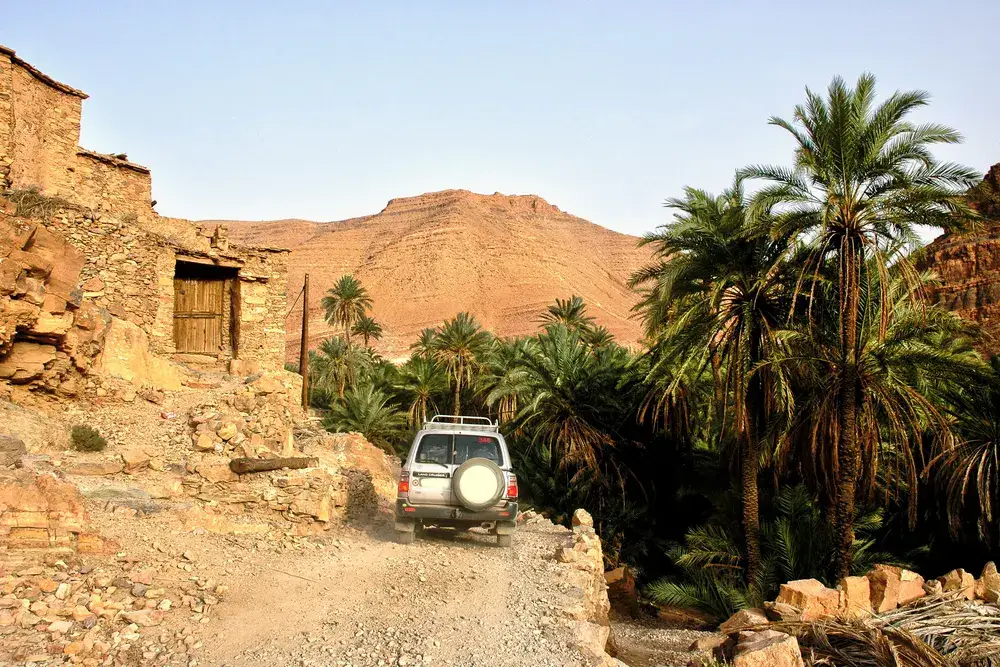
The terrain envisaged for this day remains a link road and, potentially, a short authorised practical introduction. The overnight stay can be organised in local accommodation depending on the proposal. Do not combine a long approach road with an imposed technical session at the end of the day. Meals and sleeping arrangements are confirmed in the quote.
Day 2: Discovering the Drâa and setting the pace
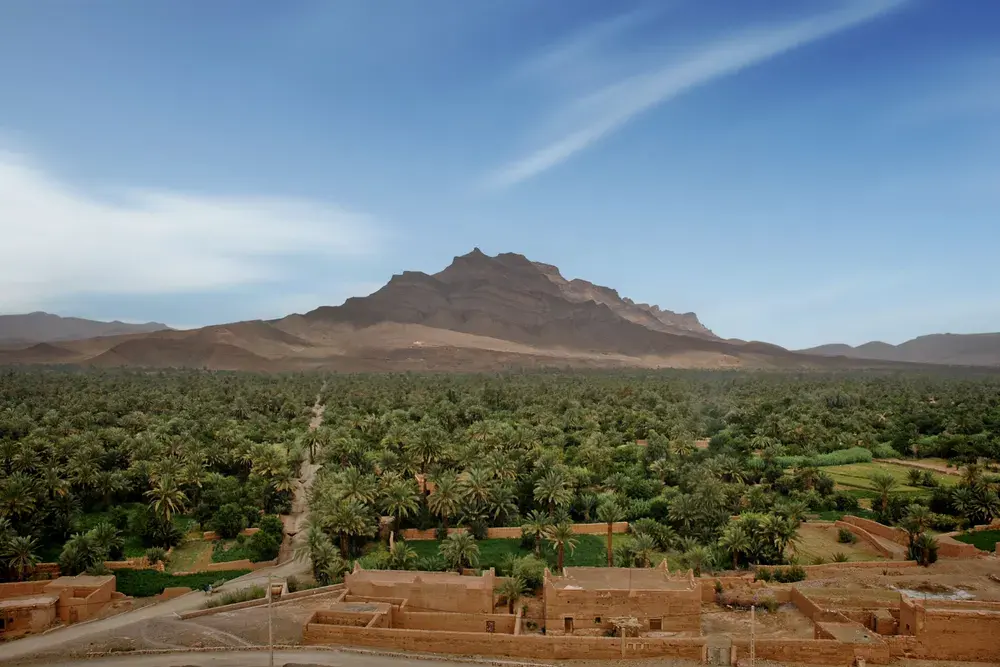
The roads and accessible tracks around the palm groves can offer a first progressive discovery. The guide adapts the stops to the access points and the group. Stops are also used to check packing, fatigue and understanding of instructions. A short walk or visit depends on the heat and the selected programme.
Accommodation can remain in local lodgings or move to a desert camp if planned. This alternation must be decided before departure. The landscape changes without the need to seek additional difficulty at every stage. Respect local cultures and access routes used by residents.
Day 3: Tackling more mineral terrain
A stage in the Bani sector or on validated tracks allows for observation of other landscapes. Stony terrain requires preserving tyres, mountings and the underside of the vehicle. Speed is chosen according to visibility and the state of the track, not according to a target average. The guide may bypass a degraded section.
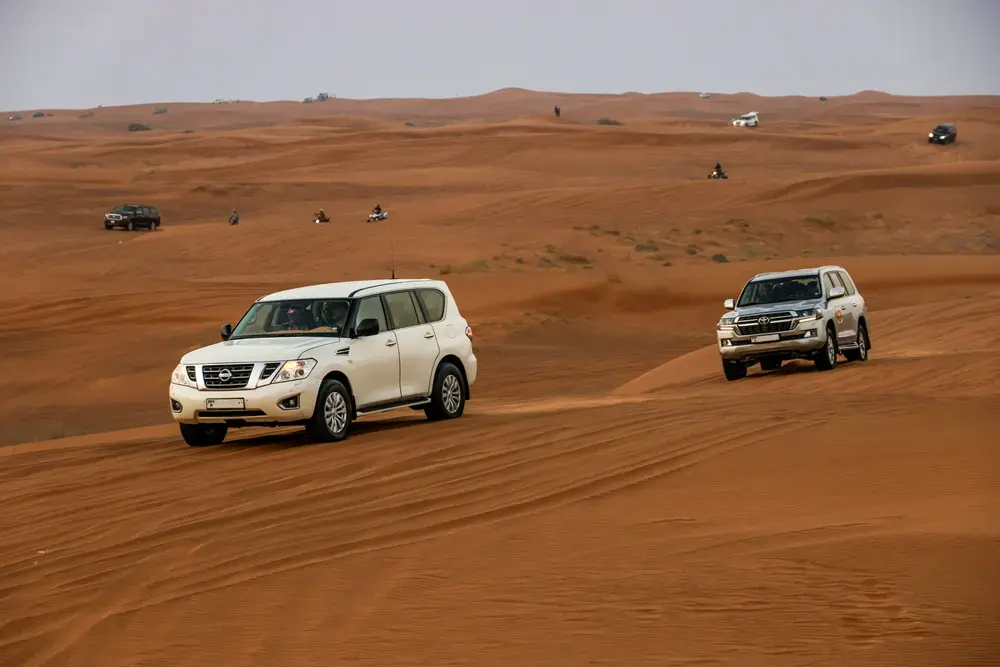
Before leaving resupply zones, check planned reserves and communication. The night can be spent in a desert camp or a confirmed alternative. Location and access depend on conditions. No stage in military or border zones is offered as an attraction.
Day 4: Discovering sand with adapted progression
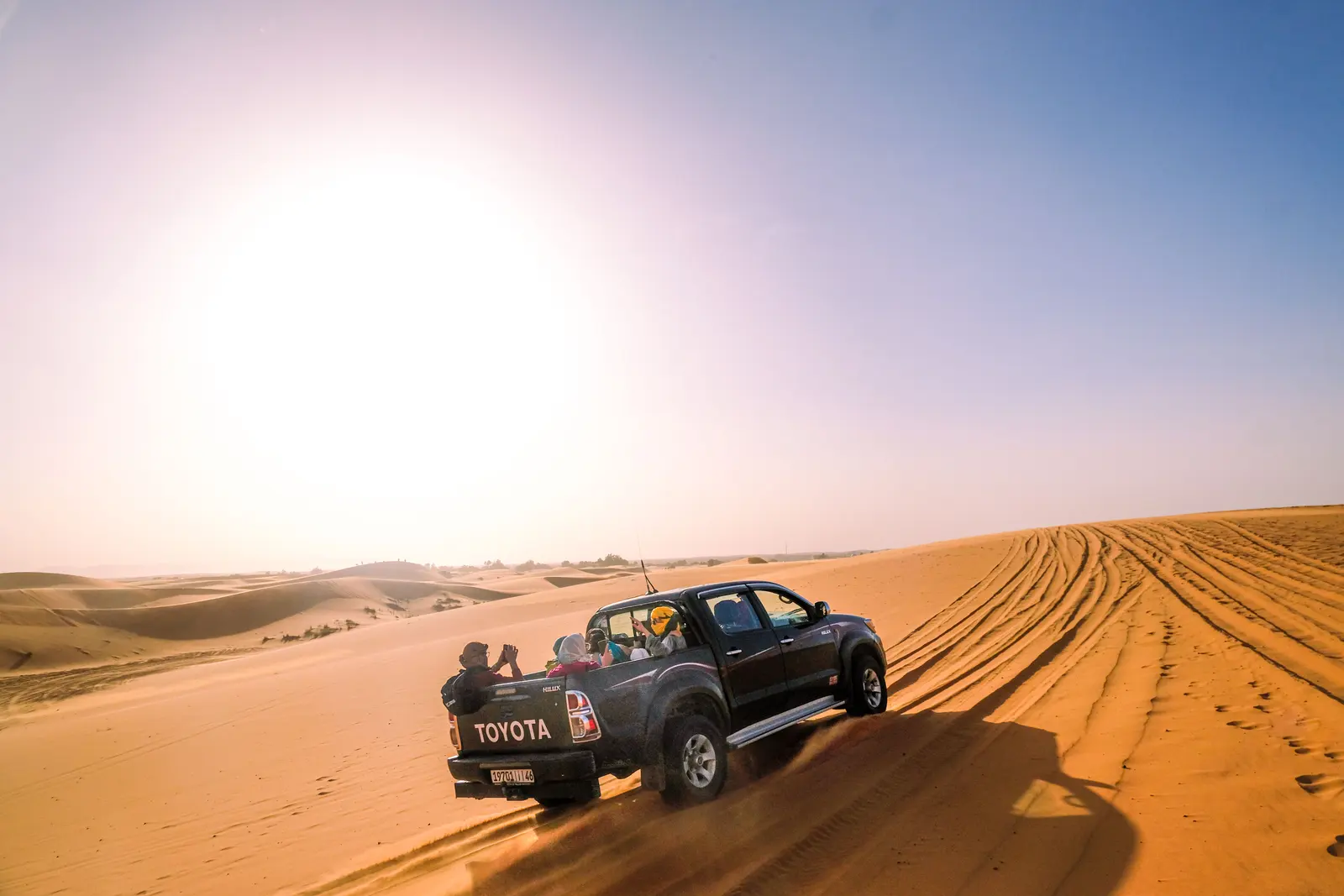
The approach to a dune sector allows for working on terrain reading and initial techniques, if the group level allows. Briefing precedes driving. Tyre pressure is adjusted with the instructor according to the vehicle and load; there is no universal value valid for this day.
Beginners can request initiation on chosen terrain and bypass options. Passengers remain outside dangerous zones during recovery operations. The night and meals will be those provided in the programme; a simple desert camp should not be confused with a camp equipped with private bathroom facilities.
Day 5: Exploring the desert further or choosing a variation

An additional day can extend the discovery towards the Chegaga sector, if the programme and conditions allow. It can also be used for a gentler stage, a short walk or a progressive return. Wind, visibility and fatigue are valid reasons to modify the order of activities.
The crossing of Lake Iriki is never guaranteed by this outline. An assessment of the terrain and an alternative are necessary. The camp or accommodation is confirmed based on the actual route selected. A sunrise may be offered when conditions are suitable, without the obligation to tackle a technical dune.
Day 6: Beginning the return and maintaining a margin
The return is not a day to be filled just because the group is better at handling the vehicles. Plan an authorised route compatible with autonomy and deadlines. Pauses allow for checking tyres, fluid levels and mountings, and for reporting observed impacts. Progression must remain compatible with the condition of the vehicle.
An overnight stay in local accommodation can facilitate rest and packing before the final stage. This option must be confirmed in the quote. Arrival time cannot be guaranteed based on a theoretical distance; provide a margin for the unexpected and avoid booking tight transport connections immediately after the off-road section.
Day 7: Finishing, checking and preparing the rest of the journey
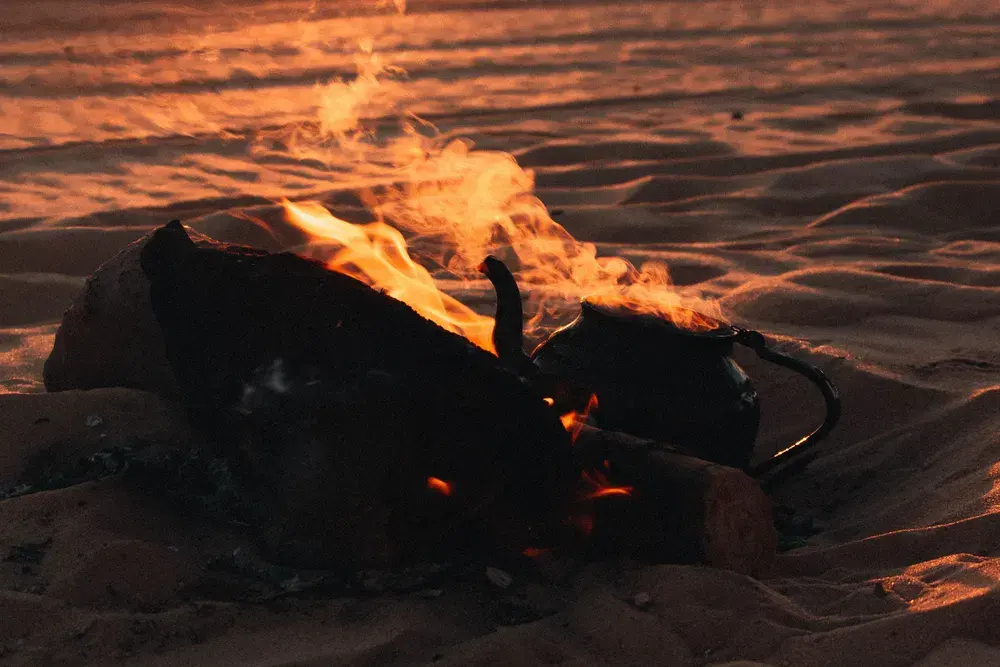
The end of the guided 4x4 tour includes the debrief, useful checks and information for the return journey. Have any vibration, leak or unusual behaviour checked before a long road section. Re-inflation and packing must be adapted for road travel. Potential assistance does not replace the diagnosis of an anomaly.
If you have a long journey or a flight, an extra night may be preferable. The final day is not automatically a full day of crossing. The end point of services, meals and participant transport must be specified in the proposal.
Table for preparing nights and stages
| Day | Indicative nature of the stage | Night to be confirmed in quote |
|---|---|---|
| 1 | Link road, checks and briefing | Local accommodation |
| 2 | Drâa, accessible roads and tracks | Planned accommodation or camp |
| 3 | Mineral terrain and validated track | Desert camp or alternative |
| 4 | Initiation or sand discovery | Camp according to programme |
| 5 | Desert or adapted variation | Night according to selected route |
| 6 | Progressive return and checks | Confirmed accommodation |
| 7 | Debrief and final link | Potential night outside tour |
Moving from this outline to your confirmed programme
Present your dates, your arrival city, the vehicle and the participants. The Classic format allows you to discuss your expedition project; the Route of a Thousand Kasbahs tour page describes another seven-day proposal. Ask for the distances, overnight stays, inclusions and exclusions of your chosen option. A successful week depends on a clear programme, not a promise to traverse every dune.
Frequently asked questions
Is this programme identical to the Thousand Kasbahs route tour?
No. The framework describes an illustrative week around the Drâa and the desert. The kasbahs tour follows another logic of valleys and heritage; consult its page for commercial stages.
What mileage should you plan for each day?
Distances will be specified in the confirmed programme according to the selected passages. No unvalidated mileage is invented. Difficulty and driving time count as much as distance.
How many nights of desert camp are included?
The number and type of nights are confirmed in the quote. The framework guarantees neither six nights of camp nor specific equipment; indicate your desired level of comfort.
Can you participate as a beginner?
A route can be adapted to the level, vehicle, and passengers. Ask for an accessible progression and bypassing possibilities; not all adventure weeks present the same difficulty.