By the Raids du Sud team — guides and mechanics based in Tagounite
Southern Morocco is more than just dunes. This selection connects earthen architecture, valleys, palm groves, and desert, with landmarks to choose stops without turning your trip into a checklist of sites.
Discover our 4x4 guided adventure in Morocco and compare the packages suited to your project.
Southern Morocco is home to the country's most spectacular landscapes. Within just a few days, you transition from the peaks of the Atlas Mountains to earthen kasbahs, and from lush palm groves to the vast dunes of the Sahara. Here are the 8 unmissable sites and the best way to connect them.
Why explore Southern Morocco by 4x4?
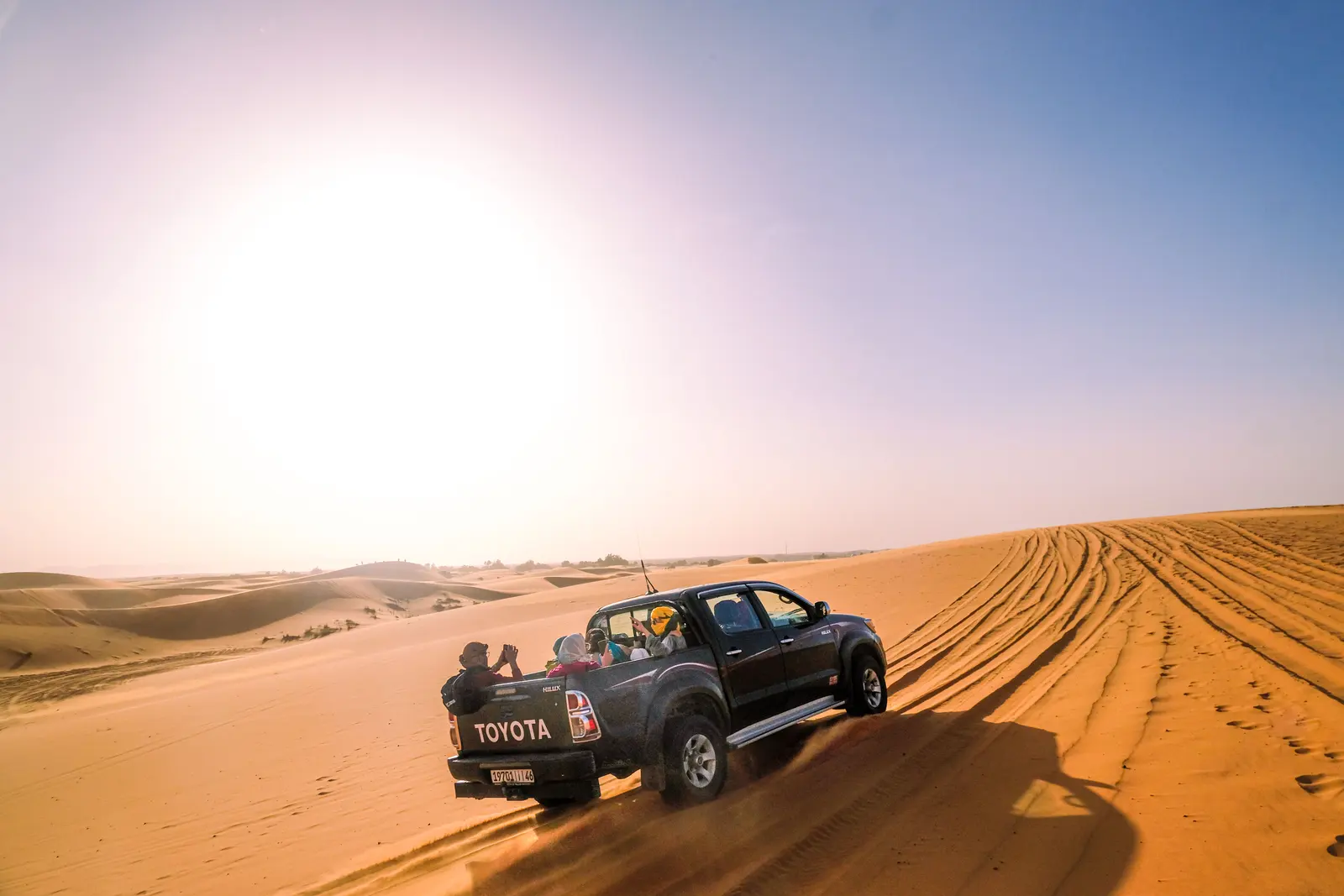
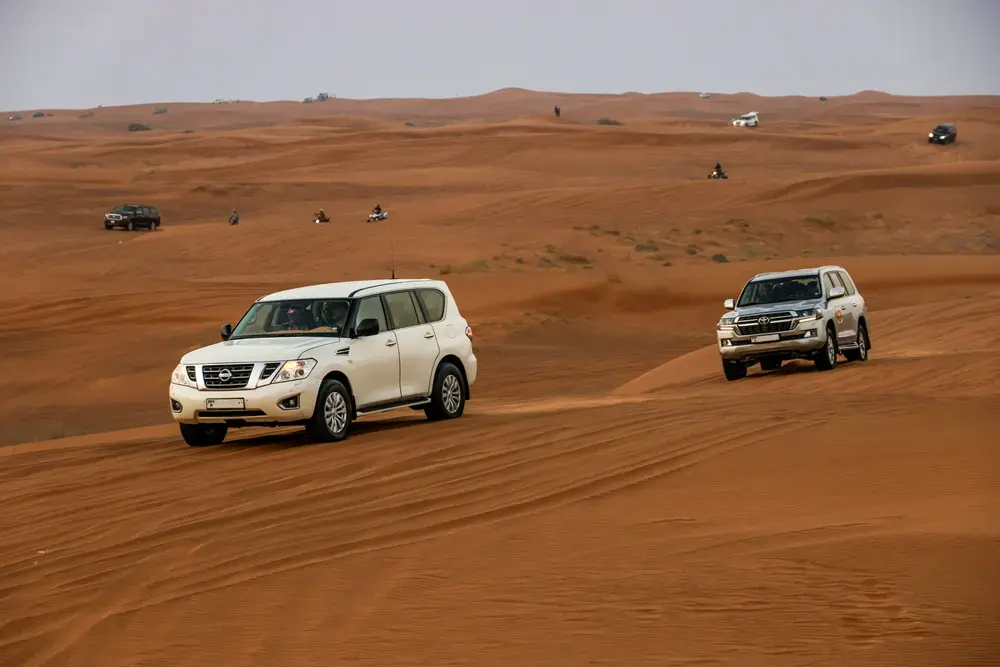
The major cities of the South are connected by good roads. However, the most beautiful sites are often hidden at the end of a track. That is why a 4x4 allows you to reach the dunes, dried-up lakes, and remote villages without depending on bus timetables.
The 8 unmissable sites of Southern Morocco
1. The Ksar of Aït-Ben-Haddou
This fortified red-earth village overlooks the Ounila wadi. It is, incidentally, a UNESCO World Heritage site and has served as a backdrop for numerous films. Be sure to climb up to the granary at the top of the hill for the view.
2. Ouarzazate, the gateway to the desert
Ouarzazate is the crossroads of the South. The city notably houses cinema studios and the Taourirt Kasbah. It is also a good stop to refuel before heading onto the tracks.
3. The Dades Valley
Nicknamed the Route of a Thousand Kasbahs, the valley strings together villages, gardens, and sculpted cliffs. Above all, its hairpin bends are among the most photographed roads in the country.
4. The Todra Gorges
Near Tinghir, the canyon narrows between two walls several hundred metres high. Walk along the bottom of the gorges early in the morning, before the groups arrive.
5. Merzouga and the Erg Chebbi
This is the postcard image of the Moroccan Sahara. The orange dunes here rise over 150 metres high. Spending a night in a bivouac is therefore a must.
6. The Draa Valley and Zagora
This valley features a palm grove stretching over 200 km. Then, at the end of the road, Zagora is famous for its 'Timbuktu 52 Days' sign, which recalls the ancient caravans.
7. The Erg Chigaga
Wilder than Merzouga, the Erg Chigaga is only accessible via the track from M'Hamid. Consequently, few visitors go there, making it a true raiding terrain.
8. Lake Iriki
This large dried-up lake forms an immense flat plain between the Erg Chigaga and Foum Zguid. Thus, driving a 4x4 there creates a sense of an endless horizon. A unique sensation.
In what order should you visit Southern Morocco?
In our opinion, the most logical loop starts and ends in Marrakech:
- Marrakech → Aït-Ben-Haddou → Ouarzazate
- Ouarzazate → Dades Valley → Todra Gorges
- Todra → Merzouga (Erg Chebbi)
- Merzouga → Zagora (Draa Valley)
- Zagora → M'Hamid → Erg Chigaga → Lake Iriki
- Foum Zguid → Ouarzazate → Marrakech
Allow 8 to 10 days to see everything without rushing. Furthermore, our 8-day Morocco tour details each stage, and our method for building a Morocco itinerary helps you adapt it.
When to travel to Southern Morocco?
Autumn and spring are ideal. From October to April, it is mild during the day and cool at night. Conversely, in summer, the heat becomes gruelling in desert areas. Finally, in winter, the Tichka Pass can be snowy: check conditions before you set off.
Discover Southern Morocco with Raids du Sud
Raids du Sud organises 4x4 raids in Morocco that connect these sites in small groups, with a guide and nights spent in bivouacs. Contact us to build your itinerary.
Access and pace: preparing each site differently
At Aït-Ben-Haddou, discovery is primarily done on foot in accessible areas. Park in an authorised location and choose a time compatible with the heat and visiting hours. The 4x4 is for reaching the stage; it does not grant permission to drive in fragile heritage spaces. Wear suitable footwear and ask about visiting arrangements.
Ouarzazate is suitable for a stopover, an overnight stay, or a selected visit. A late arrival after the Atlas means you cannot see everything. Select one site and keep some time to rest. Urban and road journeys do not require searching for an off-road track to create an impression of adventure.
In the Dadès, viewpoints and walks should be chosen according to the weather and access. A side track can change in difficulty after rain; have it checked rather than following an old trail. Cooler hours are often better suited for walking, but the day's conditions remain the deciding factor.
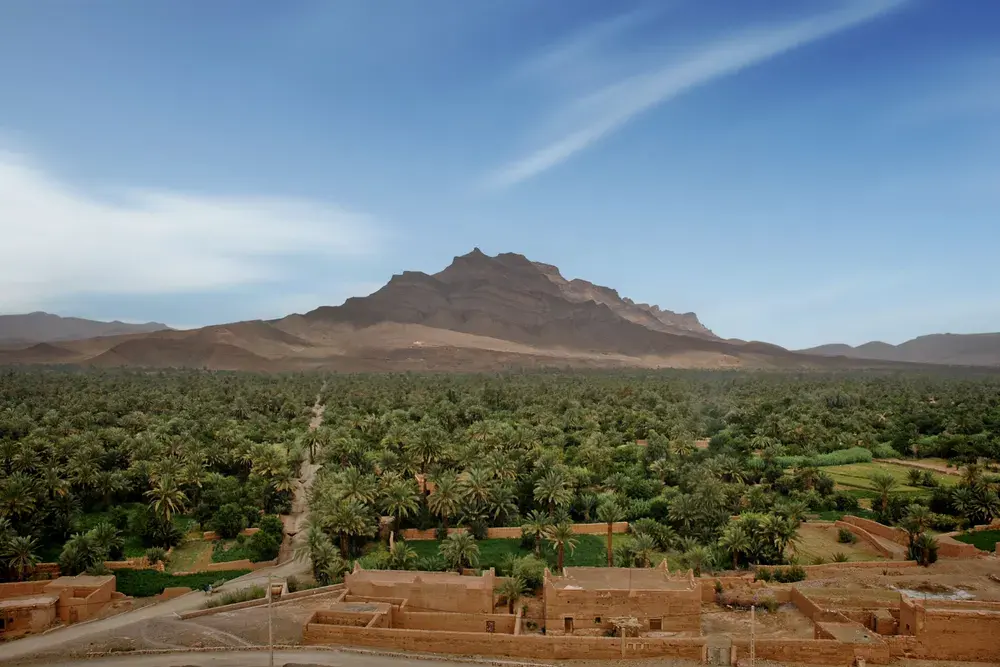
At the Todra, keep a margin for visitor numbers and the sector's conditions. The area around the gorges is not a place for improvisation in the event of water flow. Distinguish a short accessible walk from a sporting activity requiring its own supervision. The route of the thousand kasbahs circuit allows you to discuss this type of stage without promising a crossing of the dunes.
Merzouga and the Erg Chebbi require separating road access from progression in the sand. The difficulty level increases when moving from easy surroundings to technical dunes. Visit the Merzouga destination page to prepare your programme. Sunrise or sunset can be a beautiful moment, if access, timing, and the guide allow it.
In the Drâa Valley, around Zagora and Tagounite, stops are combined with travel. Some local tracks can be simple, others require scouting. Respect crops, access for residents, and private property. Our Zagora and Tagounite guides help distinguish between the stopover town, the preparation base, and the approach to the desert.
At Erg Chegaga, isolation and track conditions require adapted logistics. Ask for supervision, self-sufficiency, and communication resources. The programme must include an alternative if wind or access issues alter the progress. The Erg Chegaga destination is not a road detour that one adds to the end of an already busy day.
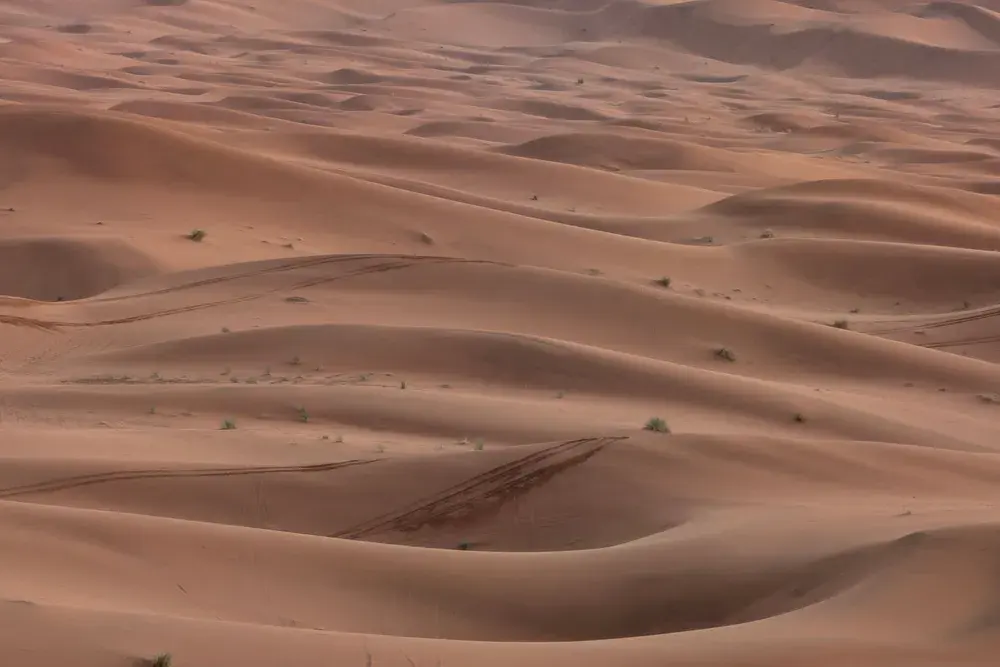
Finally, Lake Iriki must never be described as a guaranteed crossing. Ground that looks hard on the surface may not be weight-bearing. Passage depends on a field assessment and the authorised programme. Keeping an alternative route is more important than sticking to a line drawn on a map.
Choose fewer sites to explore them better
Start with your actual available days and your starting point. Then select a coherent set: kasbahs and valleys, Drâa and Chegaga, or an approach to Merzouga. Trying to connect all the locations in a short stay mainly increases travel time.
The final distances and schedules will be specified in the proposal. State your level and the needs of your passengers before booking. A site can be accessible by road while still requiring caution for its surrounding tracks: these are two different questions.
Frequently asked questions
Do you need a 4x4 for all these sites?
No. Several stages are accessible by road; the vehicle and supervision become important for specific trails. Have the programme validated rather than considering the entire South as off-roading.
Can you cross Lake Iriki all year round?
The crossing depends on the state of the terrain and authorised access. It is never guaranteed. An alternative route must remain possible if conditions do not allow for a safe passage.
How do you choose between Merzouga and Chegaga?
Compare access, available time, your experience, and the desired level of isolation. Both sectors require adapted preparation; consult their destination guides and ask for a coherent programme.