By the Raids du Sud team — guides and mechanics based in Tagounite
The Jimny may be suitable for certain Moroccan routes, but its size and preparation must match the planned guided adventure. Before adding accessories, check the mechanical condition, load, and programme conditions.
Discover our 4x4 guided adventure in Morocco and compare the packages suited to your project.
When we talk about Suzuki 4x4s in Morocco, one name dominates conversations among off-road enthusiasts: the Jimny. Small, boxy, endearing, this mini-off-roader from Japan has been making waves since its arrival at Suzuki Morocco dealerships. But behind its retro look and reduced format, is the Jimny really capable of tackling Moroccan tracks, from the Middle Atlas to the dunes of Merzouga?
Prepare your itinerary with our 4x4 raid packages.
Suzuki 4x4 in Morocco: a manufacturer still committed to off-roading
Suzuki is a historic player in the compact 4x4 market, and Morocco is one of the markets where the brand continues to offer the Jimny as a new vehicle, whereas Europe had to abandon it for emission standards reasons. A stroke of luck for Moroccan off-road lovers, who can still acquire this cult vehicle from a dealership.
In Morocco, the Jimny is marketed mainly in the 1.5 GLX 3-door version, with manual or automatic transmission. Versions, availability, and lead times must be verified with the dealer. The second-hand market remains active, with units available according to the model year and condition — check with Suzuki Morocco dealers.
The current Jimny incorporates all the fundamentals of a true off-roader:
- Separate ladder frame chassis
- Selectable four-wheel drive with transfer case
- Low range for difficult passages
- Rigid axles at the front and rear
- Long-travel suspension
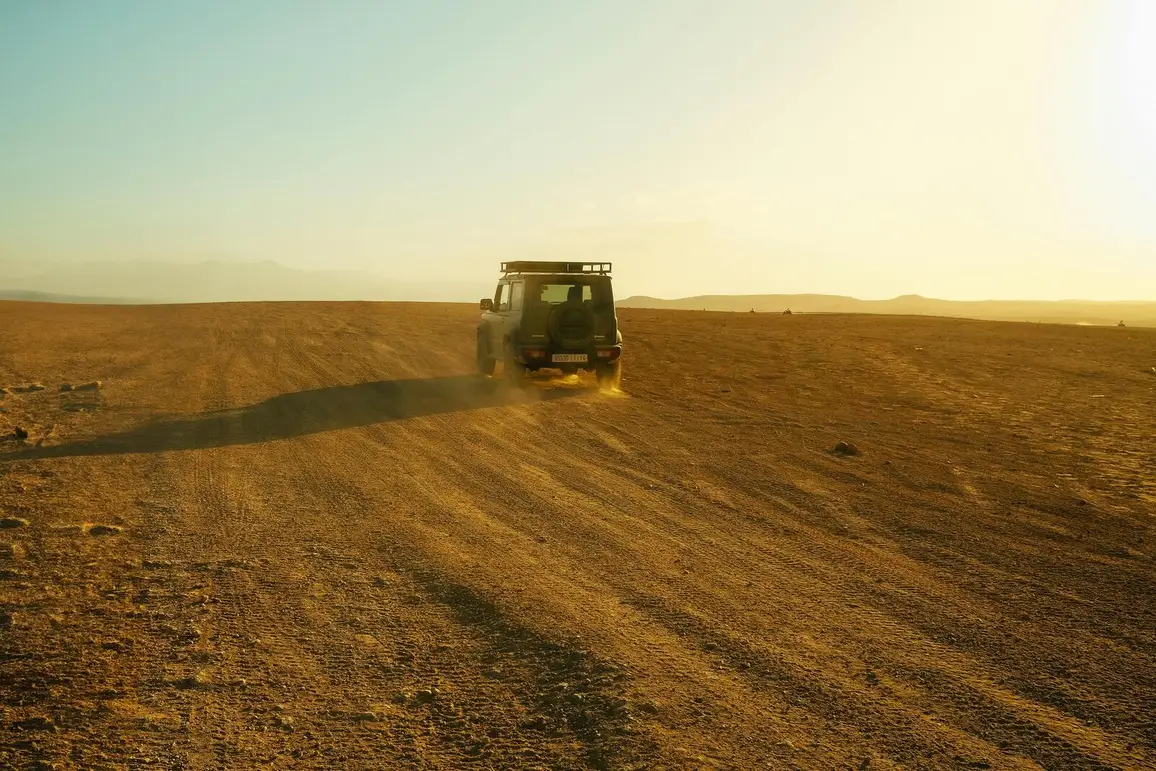
Real off-road capabilities on Moroccan terrain
At just 1,135 kg, the Jimny benefits from a power-to-weight ratio much more favourable than most modern 4x4s, weighed down by comfort features.
Angles worthy of the segment benchmarks
- Approach angle: 37°
- Departure angle: 49°
- Breakover angle: 28°
- Ground clearance: 210 mm
These figures rival those of a Jeep Wrangler or a Land Rover Defender, in a much smaller size and segment.
A transmission that does the job
The Jimny features an ALLGRIP PRO system with three modes: 2H for the road, 4H for slippery paths, and 4L (low range) for technical passages. Engagement is via a small mechanical lever, as on the true 4x4s of yesteryear. Check the transmission operation and the guidelines specific to the model year.
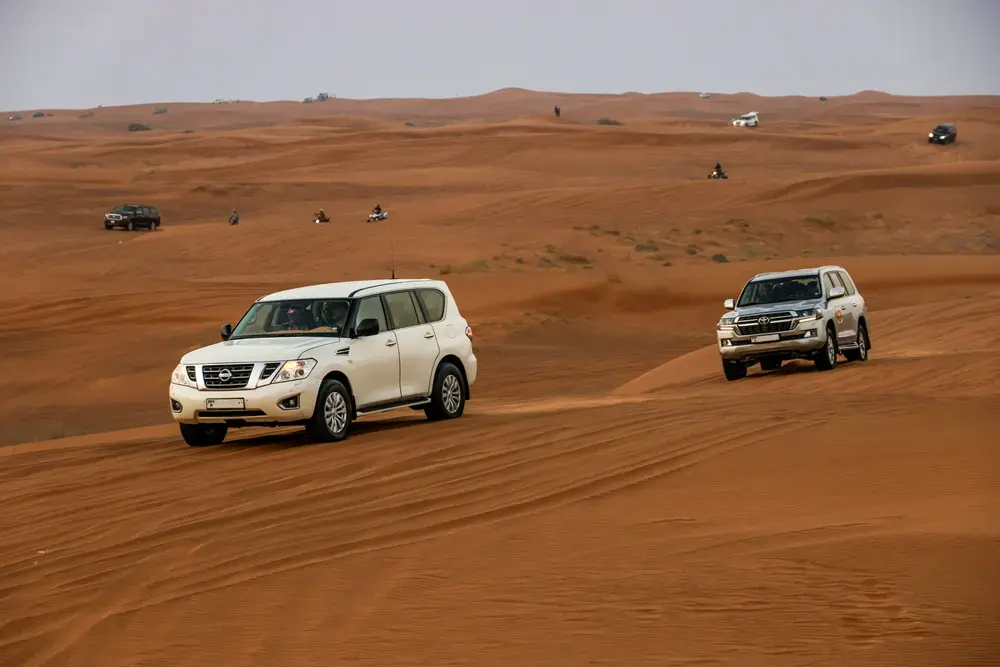
Performance on terrain typical of Morocco
- Atlas and Rif tracks: excellent. Its compact format fits everywhere on narrow mountain paths.
- Dried-out wadis and stony ground: very comfortable thanks to its angles and ground clearance.
- Small dunes and firm sand: correct, provided the tyres are well deflated.
- Large dunes of Erg Chebbi in Merzouga: the Jimny shows its limits. The 102 hp 1.5 engine lacks torque in soft sand — serious preparation is recommended.
Limits to know before buying
- 102 hp 1.5 engine lacking torque on soft sand and long climbs
- Short wheelbase (2,250 mm) unstable at high speed, especially in crosswinds on the motorway
- Tyres to be checked and chosen according to terrain, load, and manufacturer recommendations
- Tiny boot (85 L with seats raised), impractical for long family raids
- Limited Suzuki network in Morocco (mainly Casablanca, Rabat, Marrakech, Tangier)
Suzuki Jimny vs other 4x4s available in Morocco
Compared to the Dacia Duster 4x4: the Duster offers more space and comfort, but it is a crossover with all-wheel drive, not a true 4x4 with a transfer case. The Jimny is significantly superior in pure off-roading.
Compared to the Toyota Land Cruiser: the Land Cruiser remains the absolute benchmark in Morocco, in a completely different size and segment. The Jimny is complementary rather than a competitor.
Compared to the Jeep Wrangler: same logic — the Wrangler is in another size category. Where the Jimny excels: narrow Atlas tracks, off-roading in deep southern valleys, muddy northern terrain in winter.
How to prepare your Suzuki Jimny for the Moroccan desert?
For raids towards Merzouga, Zagora, or the Drâa, a few modifications radically transform the vehicle's capabilities:
- Adapted tyres, in an authorised and validated size for the vehicle
- Intake equipment to be validated; a snorkel does not authorise crossing a ford without assessment
- Possible suspension modification only after technical and contractual validation
- Aluminium underbody protection against stones
- Sand recovery tracks essential for dune outings
- 12V compressor to re-inflate tyres after sandy sections
Verdict: should you buy a Suzuki Jimny in Morocco?
The choice depends on the route, the Jimny is a true 4x4, and one of the most authentic still available new in Morocco. Its separate chassis, low range, and rigid axles make it an exception in a market invaded by all-wheel-drive SUVs without real off-road capabilities.
It is not the ultimate 4x4 for everyone. If you want comfort and space, look at a Duster or a Sportage instead. But if you want a compact, reliable, and economical off-roader capable of taking you where vehicles four times the price would get stuck, the Jimny remains one of the best deals on the Moroccan market.
Read also
Practical preparation: starting with a loaded vehicle
Check the Jimny exactly as it will depart, with its passengers and luggage. A test drive when empty does not allow you to evaluate how a vehicle behaves when loaded for several nights. Respect the permitted weights and the manufacturer's limits. The small boot encourages you to select your equipment carefully rather than shifting an overload onto the roof, where it raises the centre of gravity.
The technical specifications, versions and availability mentioned in this guide must be verified for the specific model year being used. A tyre size, suspension lift or protection plate is not a universal prescription for all vehicles. Consult a professional before making any modifications and check the consequences for insurance, vehicle approval and road handling.
Tyres, pressure and protection: avoid universal recipes
Choose tyres in good condition that are suited to the terrain, the load and the permitted dimensions. Inspect the sidewalls, the spare wheel and the tools required to replace it. The pressure for sand is decided in consultation with your guide; do not just copy a generic value. A compressor and pressure gauge will allow you to return to the appropriate road pressure before leaving the trail.
Underbody protection can be relevant on rocky terrain, but it must be correctly fitted and compatible with vehicle maintenance. A snorkel does not turn the Jimny into a vehicle capable of crossing any ford. Depth, current and the state of the riverbed require assessment; the prudent choice is often to go around.
Range, cooling and useful equipment
Calculate your range based on observed fuel consumption for the planned load and terrain, keeping a safety margin decided with your guide. Do not assume a universal distance per tank. Fuel transport solutions must be adapted, secure and compliant with applicable rules. Verify the refuelling points in the programme rather than relying on an unconfirmed station.
Check the cooling system, belts, hoses, fluid levels and brakes before departure. Ask which parts or consumables are relevant to your version; a box of unsuitable equipment does not provide safety. Approved recovery points, sand ladders and stable storage are more useful than spectacular equipment that nobody knows how to use.
When to consult a mechanic before a guided 4x4 adventure
A vibration, leak or unusual overheating deserves a diagnosis before heading to the desert. Have any recent work checked and test the vehicle on the road with its load. The presence of support during a guided 4x4 adventure, when included in the quote, does not replace this preparation.
For a check-up or if you encounter a mechanical difficulty, consult our 4x4 mechanical assistance in Morocco page. Describe the model, the symptom and the location before requesting assistance. The condition of the vehicle and terrain conditions remain the deciding factors in the choice of programme.
Frequently asked questions
Can a stock Jimny participate?
It depends on its condition, tyres, load, and the route. Present its version and equipment to the guide before booking. Some sectors require adaptation or a different itinerary.
What pressure should you use in the sand?
There is no single value. Follow the recommendations adapted to the tyres, load, and terrain, then re-inflate before returning to the road. Excessive reduction increases the risks.
Is it mandatory to lift the vehicle?
No. A modification must meet an identified need and be technically validated. A well-maintained vehicle on an adapted route may be preferable to untested preparation.